Environmental News (2)
Composting trial puts cups and plates under the microscope
Where can commercially compostable packaging and serviceware be processed in New Zealand?
Letter from the Committee: Our 2026 Plans
 Welcome to the first edition of Sustainability News for 2026!
The Environment Committee has been hard at work planning a year focused on connection, education, and navigating the evolving landscape of our industry.
You’ll notice our first big change right away: we’ve moved to a new EDM format. This digital-first style allows you to click through directly to the stories that matter most to you.
Here’s a look at what we have in store for 2026:
Quarterly Lunch & Learn Sessions
In addition to our quarterly newsletters, we are excited to bring back "Lunch n Learn" webinars for another year. We’re kicking things off on Tuesday, 14th April at 12:30 pm with Emily Thomas from Fonterra. Emily will provide a vital update on global regulations and, crucially, what they mean for New Zealand businesses.
Operation Clean Up 2026
Mark your calendars for 9th – 13th November. Following the incredible momentum of the last few years, we’re aiming for even greater participation this year. We encourage you to engage with your local branch for a nearby event or, if you’re in a remote location, to organise your own. We’ll be sharing more details soon, but you can count on further community engagement and, of course, a traditional sausage sizzle!
Innovation Through Challenge
We recognise that supply chain issues are currently weighing on the sector. We are here to support you through this, please reach out and let us know which topics you want us to dive into or what information would help your business right now.
This committee is driven by our members. If you’re passionate about the direction of our industry, we’d love to hear from you. Whether it's a suggestion for a future article or an interest in joining the committee itself, please reach out to This email address is being protected from spambots. You need JavaScript enabled to view it..
We look forward to a year of growth, resilience, and sustainability.
Best regards,
The Plastics NZ Environment Committee
Reuse report: A Review of Wellington's Reuse Landscape
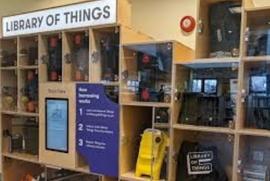 Reuse Report: A Review of Wellington's Reuse Landscape
A new report by Reuse Aotearoa has mapped the circular economy landscape across Wellington, Lower Hutt, and Porirua, identifying initiatives dedicated to reuse, repair, and sharing (RRS).
While the activity is significant (with 456 services studied) the report highlights that these services are unevenly spread across different product types.
This fragmentation creates gaps in provision that can make RRS less accessible and attractive to the general public compared to traditional linear consumption.
For the plastics industry, the report identifies critical barriers that resonate with our sector's own sustainability efforts: a lack of financial viability for circular models and limited access to suitable infrastructure. However, these challenges present a clear opportunity for industry players to step in. By leveraging the report’s findings, businesses can identify specific "gaps in provision" where their logistical expertise or material knowledge could help scale existing RRS initiatives.
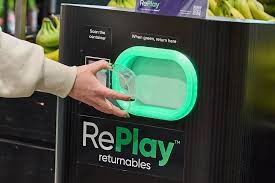
Several of our industry members are already demonstrating how to support commercial reuse models. For example, PACT Group provides a wide array of B2B reusable options, including garment hangers, fresh produce crates, and bins designed to keep resources in circulation for longer. Similarly, Bonson has partnered with New World stores to create the ‘RePlay’ system, offering customers durable, returnable deli containers through a "tap-to-borrow" smart bin technology.
These examples show that when industry takes the lead, reuse can become a seamless part of the customer experience. This report serves as a timely prompt for all industry players to reassess what reuse solutions they can be a part of. Whether through standardising impact reporting or sharing infrastructural resources, there is a clear path to turning circular theory into a resilient, commercially viable reality for the plastics sector.
We encourage members to read the report and consider where you could contribute to the reuse economy. Visit https://reuseaotearoa.org.nz/reuse-repair-share-wellington-feb2026/ to download the report.
Building With Waste
 Building With Waste
Recent global events have exposed the risk of relying on imported, virgin fossil-based feedstocks. Despite this vulnerability, domestic demand for recyclate remains sluggish, leaving valuable end-of-life materials undervalued and destined for landfill.
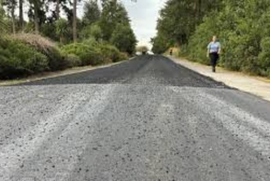
We urgently need innovative solutions that prove the worth of the resources we already have onshore. A standout example is Selwyn District Council’s recent pilot, which turned "waste" into infrastructure by using a "dry-process" asphalt infused with recycled tyre rubber.
In collaboration with partners, the Council's pilot project effectively converted a waste stream into a functional resource, using approximately 500 old tires per kilometer of road. Early findings indicate that this rubber-modified asphalt is not only a viable, sustainable alternative to landfilling tires but can also be more cost-effective due to enhanced durability and resistance to cracking, as stated by Council officials.
This innovation is part of a broader shift across the construction sector to rethink traditional materials, proving that circularity extends well beyond polymers. For instance, in 2023, Palmerston North City Council partnered with local industry to divert over 5,000 cubic metres of waste glass from landfills, crushing it to replace natural sand and aggregate in concrete and roading projects.
Furthermore, 2024 research funded by the NZTA Innovation Fund explored using reclaimed glass as a low-carbon alternative to traditional cement and lime for soil stabilisation. By integrating these diverse waste streams into our infrastructure, we are not only solving a landfill problem but actively building a more resilient, domestic supply chain that reduces our collective carbon footprint.
These solutions demonstrate the power of shifting our mindset to view end of life ‘waste’ as valuable materials. You can read more about these initiatives by following the links below:
https://www.odt.co.nz/star-news/star-districts/star-selwyn/nz%E2%80%99s-first-rubber-road-laid-canterbury
https://www.pncc.govt.nz/News-Events/News/Council-and-Higgins-Concrete-team-up-to-transform-waste-glass-into-eco-friendly-pathways-and-roads
https://www.aut.ac.nz/news/stories/recycled-glass-for-road-construction
Plastics For the Environment : A Celebration of Positive Plastics
 Plastics For the Environment? A Celebration of Positive Plastics.
As Conservation Week approaches, it’s a great time to reflect on how the plastics sector is uniquely positioned to support New Zealand’s biodiversity.
While plastic is often central to conversations about environmental challenges, our industry is increasingly providing the very tools needed to protect and restore our previous ecosystems.
From wetland preservation to large-scale reforestation, innovative plastic products are proving to be essential allies for the Department of Conservation (DOC) and community groups across Aotearoa.
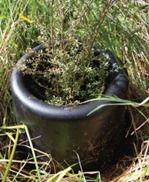 We have previously highlighted innovations in biodegradable horticulture products created by some of PNZ’s members such as Scion, EPL, and Extrutec through their Earthwine brand. Biodegradable items such as horticultural twine, vine clips, and plant pots are able to support with growing and return nutritional value to the earth when discarded. Complementing these 'circular by design' solutions are high-performance recycled plastics engineered to withstand harsh conditions over time.
Garto produces weed-suppression tree protectors made from 100% recycled NZ plastics. Their UV-stabilised guards create a warm micro-climate that accelerates plant growth and suppresses competing weeds. This significantly reduces the need for herbicide spraying in restoration areas, offering a "set and forget" solution that stays functional for up to a decade before they should be recovered and recycled again.
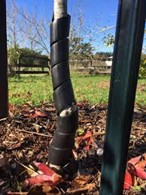 Similarly, companies like Kiwireco are providing the "scaffolding" for reforestation through recycled plastic tree stakes, ties, and trunk protectors. These products are vital for protecting young natives from wind, pests, and livestock during their most vulnerable years. By turning recycled material into high-utility conservation tools, the industry is closing the loop while helping New Zealand grow greener. It’s a powerful reminder that high-performance plastic is often the most resource-efficient choice for long-term environmental protection.
This Conservation Week, we encourage all industry players to celebrate our industry’s role in protecting our environment and reassess how your own products or materials might support local restoration efforts.
Whether it’s through supporting a community planting day or developing the next generation of circular conservation tools, the plastics sector has a vital role to play in ensuring our natural heritage thrives for generations to come.

PPWR: What is it and how does it impact Kiwi Businesses
 PPWR: What is it and how does it impact Kiwi Businesses?
Navigating the shift toward a circular economy can feel like moving a mountain, but staying ahead of the curve is no longer optional - it’s a requirement for market access.
This article provides a foundational map of the regulatory territory, but for the "boots on the ground" perspective, please check out the recording from Emily Thomas’s Lunch n’ Learn session, where Emily provided her expert insights and practical takeaways on navigating these changes in real-time. The recording can be found here: https://youtu.be/ViBbjwyOy4w
The PPWR’s comprehensive framework is designed to make all packaging in the EU market recyclable, reusable, and increasingly circular. PPWR regulation includes:
- Single-use plastics bans in various industries
- Targets for more recyclable and compostable packaging
- Minimum recycled content requirements
- Packaging minimisation (no excess space or “over-packaging”)
- Re-use and refill targets
- New labelling rules
- Chemical restrictions in food packaging
- Read more about PPWR regulation here.
 Brand owners are now accountable for understanding and owning their packaging data, rather than relying solely on suppliers. To achieve this, brand owners must hold detailed, accurate data on every packaging component—covering materials, weights, recyclability, and composition down to inks, labels, and closures.
If you/your customers are placing packaging onto the market in Europe, you/they must comply with PPWR regulations and be registered with the EPR body in each market.
From August 2026, every piece of packaging on the EU market will be legally required to have its own Declaration of Conformity (DoC). No DoC = no EU market access.
A DoC is a written self-declaration by the packaging manufacturer confirming that packaging meets Articles 5–12 of Regulation (EU) 2025/40.
This applies for B2B and B2C, household, commercial, industrial, e-commerce, and transport packaging.
Declarations must have an ability to trace each piece of packaging and substantiate claims by providing technical documentation as evidence. Read more about what a DoC must contain here.
Key dates to know
- Feb 2025: PPWR regulation is in force
- Aug 2026: Manufactures must supply a DoC for each piece of packaging. Harmful “forever” chemicals (PFAS) will be banned
- 2028–2029: Harmonised labelling becomes mandatory
- 2030: Recyclability grades(A to C) + recycled content thresholds apply
- 2038: Only packaging with recyclability grades A and B will be permitted on the EU market
Further Reading:
- MFAT - New EU rules on packaging and waste will transform its Supply Chain - March 2025
- NZTE - Ensure EU access by meeting new packaging laws
- Packaging Europe - Everything you need to know about the PPWR Declaration of Conformity
- Circularise – PPWR: A guide to compliance, timelines, and mass balance solutions
Bottom line: Start now and become compliance-ready ASAP. Audit your packaging, gather your data, and work with suppliers/support customers.
Let us know how we can be of help if you need it.
What's On?
 What's On?
Calendar dates and draft comms templates
for upcoming sustainability events.
Add these dates to the diary for the next quarter!
- 14th April at 12:30 – Lunch n Learn with Emily Thomas (Missed it? Members can view it here)
- 16th – 17th April – DDSP Processing Auckland
- 20-26 April - DoC Conservation Week
- 22 April - Earth Day
- 18-21 May – WasteMINZ Conference in Wellington (register here)
- 11th – 12th June – DDSP Design Auckland
- 30th June – Lunch n Learn (TBC)
To make the most of upcoming sustainability events, we have drafted the below comms templates:
DOC Conservation Week (20–26 April 2026)
Focus: Local biodiversity and "Naturing" at work.
Tone: Community-focused and active.
Headline: Protecting Our Backyard: Why Circularity Matters for Aotearoa
This Conservation Week, we’re doing our part to support the 80,000 native species that call New Zealand home. Our commitment to a nature-positive future means:
Provide an overview of any advancements in design/material recovery, and/or any specific actions to support DOC, e.g., running a local clean up, engaging in a planting day, giving a donation to a trapping project, etc.
Nature in Aotearoa is like nowhere else on Earth. Let’s work together to keep it that way.
#ConservationWeek #AlwaysBeNaturing #CircularEconomyNZ
Earth Day (22 April 2026)
Focus: The 2026 theme "Our Power, Our Planet" and industrial responsibility.
Tone: Empowering, innovative, and future-ready.
Headline: Our Power, Our Planet: Driving the Transition to a Circular Future
On Earth Day 2026, the global message is clear: Our Power, Our Planet. For those of us in the plastics industry, that "power" lies in innovation. We have the unique opportunity to transform how resources are used, moving away from "take-make-waste" toward a truly renewable system.
We are reclaiming our role as problem-solvers by:
Insert any recent actions taken such as investing in advanced technologies for efficiency, becoming OCS certified, increasing use of recycled content, partnering with others to ensure circularity, etc.
Individual actions matter, but industrial transitions change the world. This Earth Day, we’re proud to be the engine room of New Zealand’s circular transition.
#EarthDay2026 #OurPowerOurPlanet #SustainableManufacturing #RecycleRight

Bio Plastics - Confused? Understandably So
The terms “biopolymer” or “bioplastic” have been applied to a wide range of plastics and have been subjected to a wide range of interpretations. The incorrect use of these terms is causing confusion for manufacturers, brand owners and, most of all, consumers.
The terms 'biopolymer' and 'bioplastic' are also being used, incorrectly, to describe biodegradable, or compostable plastics, and this is adding to the confusion.
We would like to try and clarify what this terminology means, and explain how these types of materials have come to exist.
Background
Concerns about fossil resources (oil and gas) depletion, has led to efforts to replace conventional oil and gas-based plastics with plastics made from natural and renewable resources such as wood (cellulose), vegetable oils, sugar and starch. These types of plastics can be defined as 'bio-based' plastics but are often incorrectly termed 'biopolymers' or 'bioplastics'.
A clear distinction needs to be made in these plastic types:
If a plastic, or a component of a plastic, is made from a natural or renewable resource, it may be referred to as a “bio-based plastic”. Hence polyethylene made from plant-based ethylene, or polyester (PET) which incorporates plant-based butane diol, can be called biopolymers - or bio- based polymers. However they are not biodegradable polymers.
The definition of “biodegradable/compostable plastic” is based on how the plastic behaves at the end of its life. Specifically, does it degrade quickly (depolymerize) in a commercial composting operation. There are several commercially available polycaprolactone (PCL)-based blends which do indeed meet this requirement.
To avoid ambiguity Plastics NZ is keen to avoid the use of the term 'biopolymer' or 'bioplastic' except where absolutely correct. Ideally these generic terms should be substituted by the more accurate and informative equivalents shown below.
To try and explain, we have listed the most commonly used polymers that are often termed “bioplastic”:
- Biobased/renewable and non-biodegradable plastic
- Biobased/renewable and biodegradable plastic
- Fossil-based and biodegradable plastic
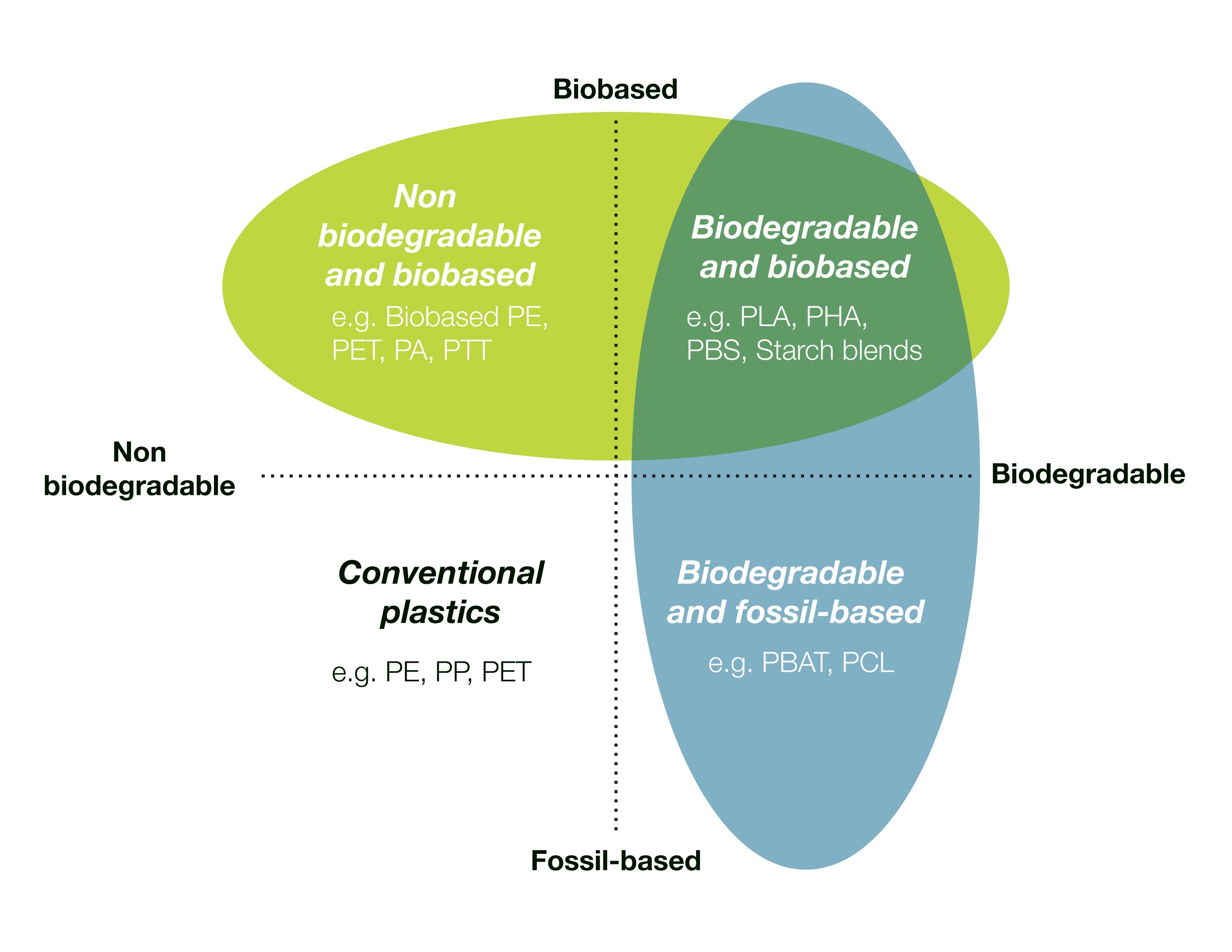
 1) Bio-based/renewable and non-biodegradable These are polymers made fully, or partly, from natural and renewable resources - biomass*.
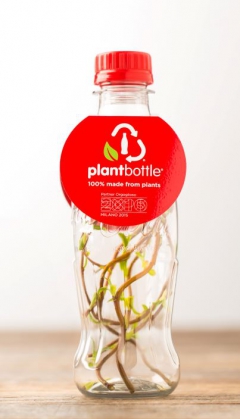
These types of non-biodegradable, bio-based plastics are manufactured in essentially the same way as conventional fossil-based plastics, but use biomass instead of fossil fuels as their building blocks. For example Ecostore polyethylene uses 100% ethylene monomer derived from biomass, certain nylons are 100% based on building blocks derived from castor oil, and Coca Cola’s Plant Bottle is PET which is made from 30% biomass.
These plastics are not biodegradable. They are designed to be identical to conventional plastics. They can be fully recycled with conventional plastics where recycling is available
2) Bio-based/renewable and biodegradable
These are plastics that are made fully, or partly, from biomass*.
These plastics are designed to be composted in an industrial composting facility and are biodegradable.
Although these polymers (PLA, PBS PHA) belong to the ‘polyester’ family of polymers, and can be recycled, they cannot be recycled with conventional polyesters such as PET. In some cases they can have a negative effect on existing plastics recycling processes. They are based on building blocks which are susceptible to hydrolysis.
3) Fossil-based and biodegradable
Surprisingly, there are some plastics that are made from fossil-based resources that can biodegrade and be composted. This kind of plastic is not common. Commercial examples such as polybutylene adipate terephthalate (PBAT), and polycaprolactone (PCL) are available.
Conventional Plastics with Additives
To add to the confusion, there has been recent growth in traditional fossil-based plastics that use additives to make them degrade faster than normal.
For example, oxo-degradable additives that are incorporated at the point of manufacture at varying levels. These oxo-degradable additives are designed to break down the polymer chain - i.e. fragments the plastic into smaller pieces.
Plastics with these additives are often described as “degradable”. They are fossil-based and are not compostable. They break down slowly (2-5 years) only when exposed to heat, sunlight, and air. Caution must be used when making claims about the degradability of plastics with such additives. A number of successful prosecutions have been taken by governments in the USA, New Zealand and elsewhere in the world, against companies making misleading claims about the effectiveness of degradable additives.
Plastics Recycling
It is important to note that most fossil-based plastics are fully recyclable. The only limitation to the extent of plastics recycling is the availability of local recycling infrastructure.
 Summary
There are many new types of plastics that are being termed bioplastics. However, there are important distinctions that must be made between how these new plastics behave, and how they can be dealt with at the end of their life. There are more specific and accurate terms that should be used.
Manufacturers and brand owners must exercise caution when marketing these new materials to consumers. Misleading or confusing claims about plastic types risks alienating consumers.
Increasingly, consumer watchdogs and regulatory authorities such as the New Zealand Commerce Commission are scrutinising material claims. Already, two companies in New Zealand have been prosecuted for misleading claims about the degradability of their plastics.
If you would like further information, or to discuss material selection, please contact Plastics New Zealand.
Plastics NZ Sustainability News
Welcome to Plastics NZ Environment Committees newsletter, 'Sustainability News'.
The Newsletter is a platform dedicated to fostering environmental awareness, promoting innovation, and sharing successes within the plastics industry. We, at Plastics New Zealand Environment Committee, believe that plastics, when used responsibly, can contribute positively to sustainability efforts.
To read the latest edition click here
2026
Sustainability News - April 2026
- Welcome to the first edition of Sustainability News for 2026!
- Reuse Report: A Review of Wellington's Reuse Landscape
- Building With Waste
- Plastics For the Environment : A Celebration of Positive Plastics
- PPWR: What is it and how does it impact Kiwi Businesses
- What's On?
2025
- Sustainability News : Edition 9 - December 2025
- Sustainabilty News : Edition 8 - November 2025
- Sustainability News : Edition 7 - September 2025
- Sustainability News : Edition 6 - July 2025
- Sustainability News : Edition 5 - June 2025
- Sustainability News : Edition 4 -April 2025